
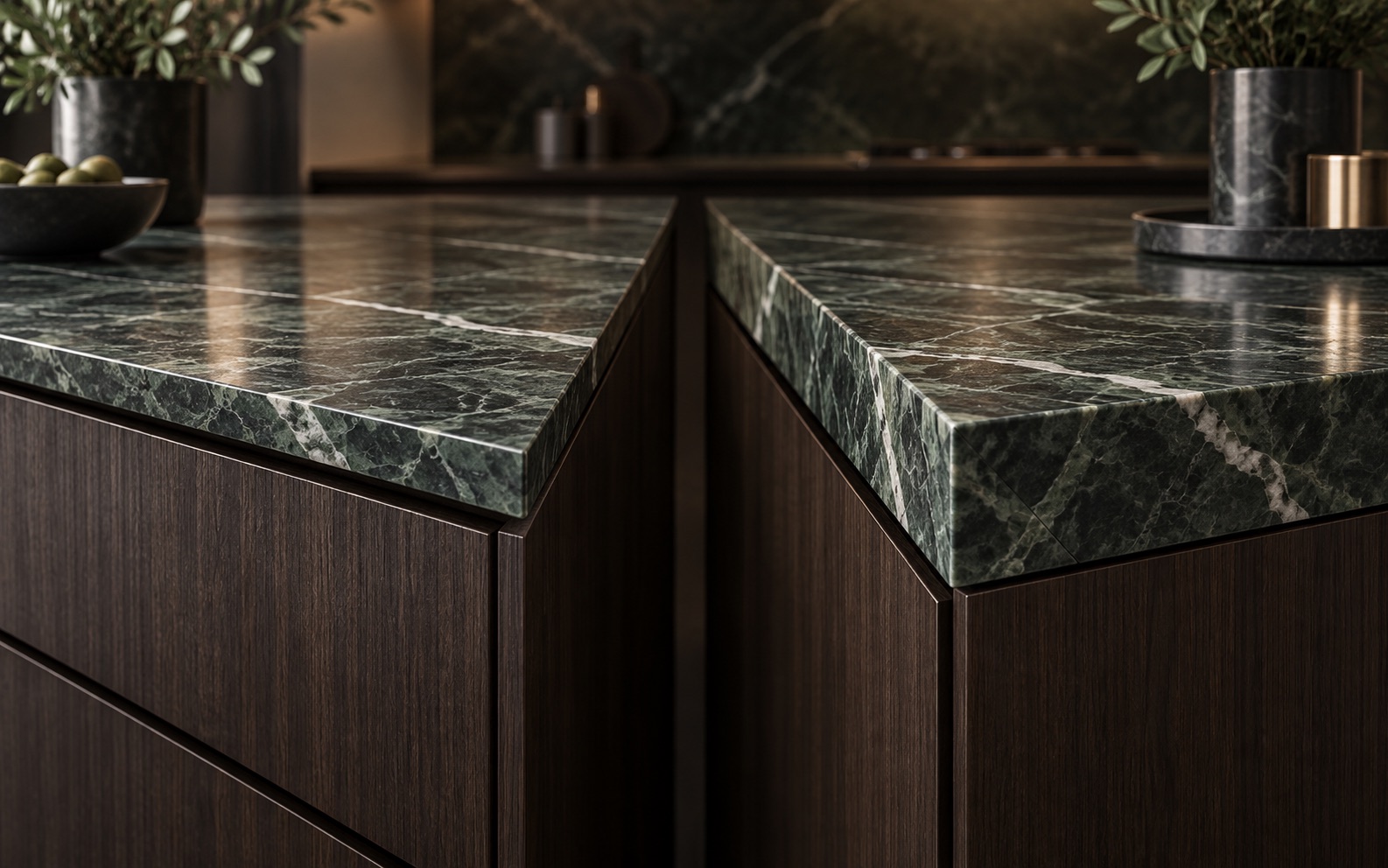
Profile comparison
Light or substantial
A 20 mm profile uses the supplied slab thickness at the visible edge. A 40 mm appearance is commonly created by joining a separate 20 mm apron to the benchtop with a precise mitred edge.
Clean and minimal
A slim edge gives cabinetry and stone a lighter contemporary appearance.
- Less fabrication at the visible edge
- Easier handling and lower overall weight
- Usually more economical
- Well suited to restrained, minimal interiors
Bold and architectural
The deeper edge creates a stronger feature and can make an island or waterfall end feel more substantial.
- Usually formed with a 45° mitred apron
- Requires careful alignment, bonding and reinforcement
- Vein movement is matched across the joined edge
- More labour, handling and finishing than a 20 mm edge
The 40 mm detail
A 20 mm top with a 40 mm visual edge
The apron is cut separately, mitred, bonded beneath the top and finished so the joint reads as one deeper piece. It is not normally a solid 40 mm slab.
Choose 20 mm when
You want a light profile, a simpler fabrication process and a restrained contemporary result.
Choose 40 mm when
You want a stronger edge, a statement island or a more substantial architectural appearance and the extra fabrication suits the project.